


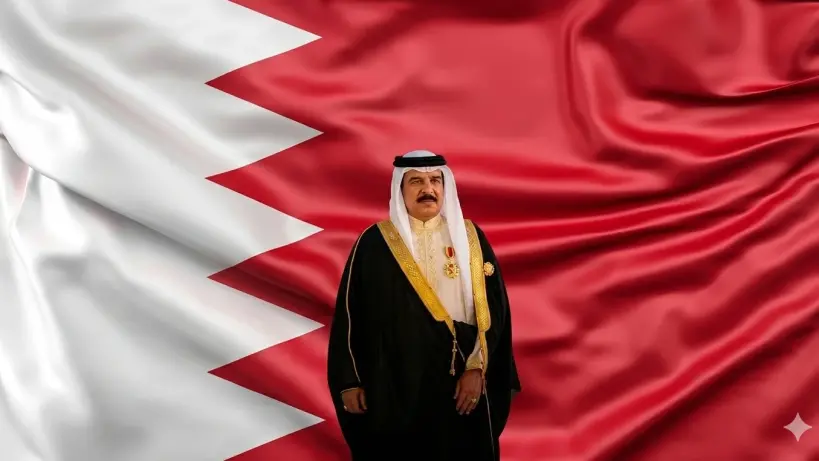
The Kingdom of Bahrain has officially activated Article II of the Comprehensive Security Integration and Prosperity Agreement (CIPA) with the United States and the United Kingdom.
This historic escalation follows a deliberate Iranian attack involving missiles and seven suicide drones targeting civilian and residential areas within the Kingdom. The move has triggered extraordinary consultations within the Defense Working Group to coordinate a unified allied response.
High-Level Defense Mobilization
National Security Advisor Sheikh Nasser bin Hamad held intensive talks with Vice Admiral Brad Cooper of U.S. CENTCOM and Air Chief Marshal Sir Richard Knighton, the UK Chief of the Defence Staff. These discussions focused on the immediate threat to Bahrain’s sovereignty and the necessity of formulating a synchronized response to halt regional destabilization.
U.S. and UK Commitment to Collective Defense
Admiral Cooper emphasized that the Iranian attack on residential neighborhoods is "unacceptable and will not go unanswered." He noted that this incident is part of a broader pattern of Iranian aggression affecting 12 countries. In a parallel move of support, UK Prime Minister Keir Starmer, following a call with His Majesty King Hamad, ordered the deployment of four additional Typhoon fighter jets to the region. These jets will be stationed in Qatar to provide a defensive air shield for Bahrain.
Upholding Regional Stability
Bahrain reiterated that invoking Article II is a calculated and legitimate exercise of the right to collective security. The Kingdom urged the international community to recognize the severity of Iran’s targeting of civilians, affirming that its partnerships with Washington and London are robust and designed to ensure that no act of aggression passes without accountability.







Comments
Log in to write a comment