


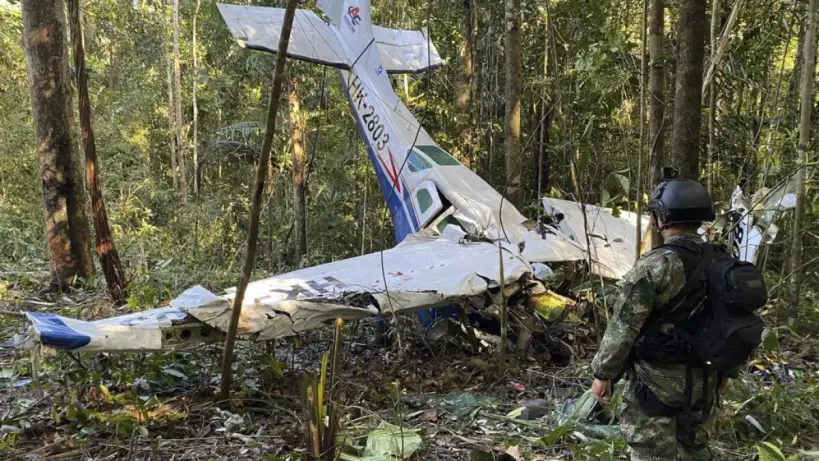
On Wednesday, a tragic plane accident in northeastern Colombia claimed the lives of all 15 passengers, including a well-known local lawmaker, highlighting the hazardous conditions of air travel in the region. The aircraft, a Beechcraft 1900 operated by the state-owned airline Satena, abruptly lost communication with air traffic controllers shortly after taking off.
Flight Details and Crash Site
The ill-fated aircraft departed from Cucuta, located at the Venezuelan border, aiming for Ocana, a short journey that ended in catastrophe. Not long after takeoff, the plane stopped transmitting signals. This occurred over a challenging mountainous area between Ábrego and La Playa in Norte de Santander province, a region notorious for its inaccessibility.
Victims and Response
The tragedy struck the heart of Colombian politics, with prominent political figures aboard. One of the victims was Diogenes Quintero, a 36-year-old representative known for his staunch advocacy of human rights in the conflict-ridden Catatumbo area. The accident also took the life of Carlos Salcedo, a congressional candidate.
Local officials reported the crash, prompting immediate response efforts. Unfortunately, upon reaching the crash site, authorities confirmed the total loss of life. The Transport Ministry expressed deep sorrow in a statement and announced an investigation into the incident.
Political and Social Impact
This incident resonates deeply within Colombian society, particularly in regions affected by ongoing conflict. Quintero's death is a significant blow to the U Party and his community, where he was a dedicated advocate. His party mourned his passing, while President Gustavo Petro shared his condolences, acknowledging the loss on social media.
Investigation and Broader Implications
Given the plane's location in a territory marked by illegal armed groups and coca production, the investigation may uncover additional challenges linked to operating in such an environment. The incident underscores ongoing safety and security concerns in areas marred by conflict and drug trade.
While the root cause remains undetermined, this crash has spotlighted the fragility of air travel in remote regions of Colombia, as well as the risks facing public figures advocating in such volatile areas. Moving forward, it may lead to increased scrutiny over aviation practices and political travel in conflict zones.








Comments
Log in to write a comment