


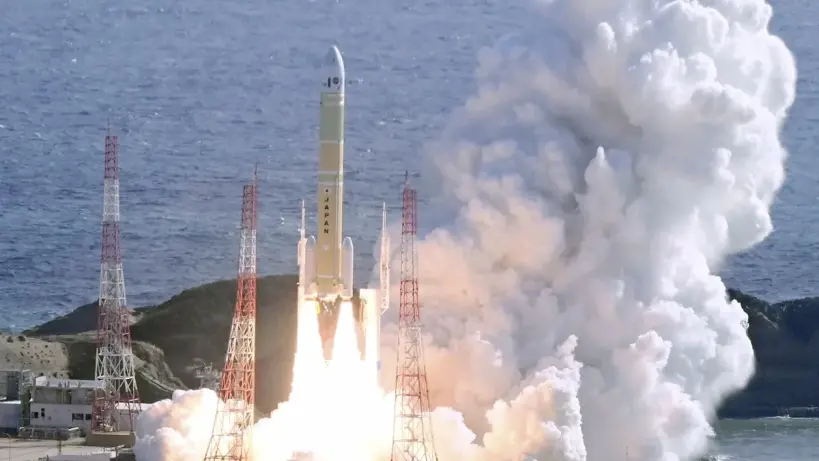
The recent launch of Japan's H3 rocket has sparked interest and concern after it encountered an unusual issue mid-flight, leading to the loss of its satellite payload. This incident has prompted deep reflections on the unpredictable nature of space exploration.
A Glimpse into the Unpredictable
For those familiar with the space industry, rocket failures are not a rarity. Various factors like engine troubles, guidance errors, or issues with staging can lead to unsuccessful missions. This time, however, Japan's H3 rocket faced an unexpected challenge that was unforeseen even by its creators.
The Eighth Launch
During its eighth mission from Tanegashima Island on December 22, the H3 rocket was tasked with delivering the Michibiki 5 satellite to an orbit more than 20,000 miles above our planet. As a medium-to-heavy lift vehicle, everything appeared on track until around four minutes into the ascent.
An Unplanned Separation
At that crucial moment, the rocket shed its protective payload fairing, intended to shield the satellite during the tumultuous ascent through the Earth's atmosphere. Instead of a smooth transition, chaos ensued. Video from onboard cameras revealed the satellite surrounded by debris, leading to instability as sensors reported sudden movements at the attachment point.
Investigations Underway
The Japan Aerospace Exploration Agency (JAXA) is actively investigating the anomaly. Technical briefings have been shared with government officials, and a comprehensive presentation, rich in technical data and flight analysis, has been made public. This level of transparency is uncommon yet invaluable for understanding what transpired.
Looking Forward
As investigations continue, the space community will be keenly watching. Such incidents remind us of the complexities and unexpected challenges in space missions, highlighting the importance of continual learning and innovation in this field.








Comments
Log in to write a comment