


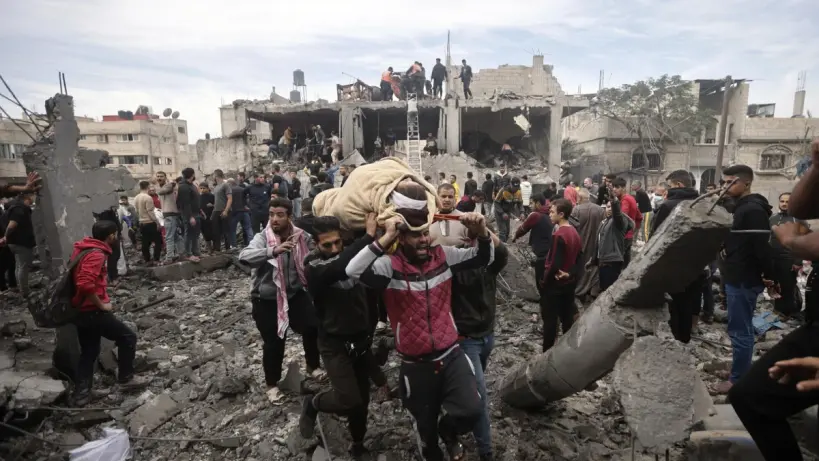
As violence continues to grip the Gaza Strip, the United Nations is pressing Israel to permit much-needed humanitarian aid into the territory. The call comes amid ongoing blockades that prevent many Palestinians from accessing essential medical treatment abroad.
UN's Repeated Appeals for Aid Access
On Tuesday, UN Secretary-General Antonio Guterres reiterated his plea for unimpeded humanitarian assistance to Gaza. Over 100 Palestinians, suffering from serious illnesses and injuries, have gathered at the Rafah crossing. They hope to secure passage into Egypt for medical care.
Efforts at the UN Headquarters
Speaking from the UN headquarters in New York, Guterres highlighted the necessity of swift aid delivery through Rafah. “Humanitarian relief must be facilitated on a significant scale,” he emphasized. Meanwhile, UN Spokesperson Stéphane Dujarric conveyed relief chief Tom Fletcher's statement that Rafah should operate as a comprehensive humanitarian corridor.
Limited Movement at Rafah Crossing
Despite the critical situation, only 16 individuals managed to cross into Egypt on Tuesday. This follows a pattern of limited movement, where just five people exited Gaza the previous day, and 12 individuals were permitted to re-enter.
Medical Evacuations and Delays
Al Jazeera’s Hind Khoudary reported from Khan Younis that the crossing process remains inexplicably slow. Many have had to abandon their belongings to pass through. Currently, an estimated 20,000 people in Gaza await urgent medical evacuation.
Violence Continues Despite Ceasefire
In a tragic turn of events, a 19-year-old Palestinian was fatally shot by Israeli forces near Khan Younis, casting doubt on the effectiveness of a ceasefire agreement introduced in October. According to Gaza's Health Ministry, 529 Palestinians have died since the start of what was supposed to be a ceasefire.
This complex situation continues to evolve, stressing the importance of humanitarian corridors and international intervention in such crises.







Comments
Log in to write a comment