


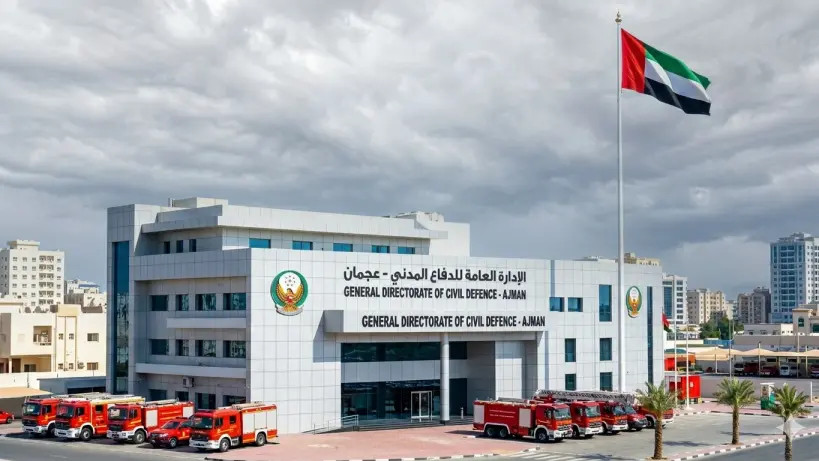
AJMAN, UAE — As the United Arab Emirates experiences a significant shift in weather patterns, the General Directorate of Civil Defence in Ajman has officially moved to a state of high alert. In a proactive move to ensure public safety, the department has intensified its operational readiness to address any incidents arising from the current wave of heavy rainfall and high-velocity winds sweeping across the emirate.
Strategic Preparedness and Emergency Frameworks
The Directorate confirmed that it has activated a comprehensive emergency response plan, specifically designed to handle the logistical challenges posed by unstable weather. This plan involves the strategic deployment of rapid-response teams and 24/7 monitoring of high-risk areas. By raising its readiness level, Ajman Civil Defence aims to minimize response times for reports concerning flooding, structural damage, or road accidents, ensuring that professional assistance is delivered with the highest efficiency.
Navigating the Roads: Essential Traffic Safety
With visibility often compromised during heavy downpours, the Directorate has issued a stern advisory to all motorists. Public safety remains the cornerstone of these guidelines, which include:
• Speed Management: Drivers are urged to significantly reduce their speed, as wet surfaces increase the risk of hydroplaning and reduce braking efficiency.
• Maintaining Safe Distances: It is imperative to leave a substantial "safety buffer" between vehicles to allow for sudden stops.
• Lane Discipline: Staying within designated lanes and avoiding erratic maneuvers is crucial for preventing multi-vehicle collisions.
• Flood Avoidance: Motorists are warned against attempting to drive through accumulated rainwater, which can stall engines or sweep vehicles off the road.
Field Safety and Environmental Hazards
Beyond the roads, the Civil Defence has identified several environmental risks that residents must take seriously. The department strongly advises against leaving the safety of one's home unless it is absolutely necessary. For those who must travel, checking the mechanical integrity of the vehicle—specifically tires, wipers, and brakes—is a mandatory precaution.
Particular emphasis was placed on the danger of "Wadis" (valleys). Residents are strictly prohibited from approaching valley streams or mountainous areas where flash floods can occur without warning. Furthermore, the public is cautioned to stay clear of electrical installations, power lines, and lighting poles, which pose a high risk of electrocution in wet conditions.
Protecting the Most Vulnerable
A critical part of the announcement focused on the safety of children. The Directorate has called upon parents and guardians to exercise extreme vigilance, ensuring that children do not leave the house or play in rain-fed puddles and ponds. These areas can hide open drains or carry harmful debris, posing a direct threat to life and health.
Combating Misinformation
In the digital age, rumors can spread faster than the weather itself. Ajman Civil Defence reminded the community to rely solely on official government channels and recognized meteorological authorities for updates. Adhering to verified information ensures that the public receives accurate instructions, helping to maintain order and calm during the storm.
By following these professional directives, the community plays a vital role in supporting the Civil Defence’s mission: protecting lives, property, and the stability of the nation.








Comments
Log in to write a comment