


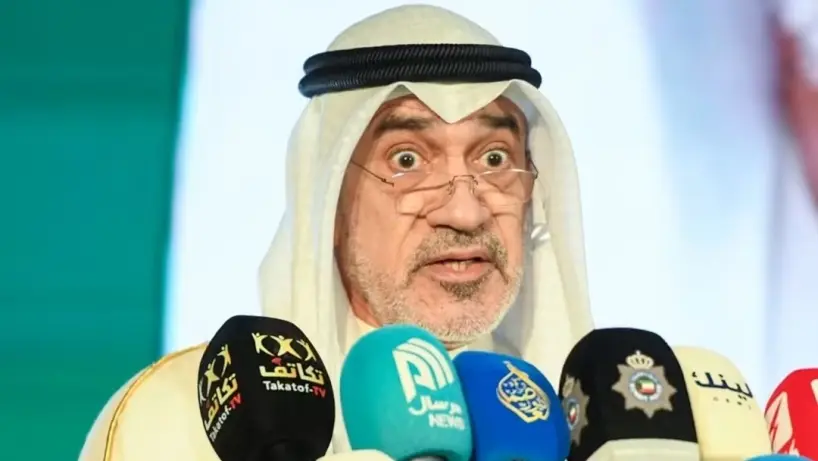
Kuwait’s First Deputy Prime Minister and Minister of Interior, Sheikh Fahad Yousuf Saud Al-Sabah, has announced the country’s largest drug seizure in history, involving massive quantities of raw pregabalin powder and ready-to-sell capsules.
The minister said the operation resulted in the seizure of approximately five tons of raw pregabalin powder, along with nearly four million capsules prepared for sale.
The total estimated market value of the seized materials was placed at approximately 150 million Kuwaiti dinars, equivalent to about $485.9 million, according to the minister.
Sheikh Fahad Al-Sabah revealed that the operation also uncovered a fully equipped facility used to manufacture the psychoactive substance and prepare it for distribution.
Security authorities also seized equipment designed for filling and dividing the capsules, highlighting the scale of the operation that was disrupted.
The minister said the size of the seizure demonstrated the seriousness of the threat that had been prevented, while praising the vigilance of Kuwait’s anti-narcotics officers.
The announcement was made during the closing ceremony of the nationwide awareness campaign titled Watan Yahmik, which focused on preventing the spread of drugs.
The campaign was organized by the Ministry of Social Affairs at the Four Seasons Hotel, with participation from government, civil society and private sector organizations.
Sheikh Fahad emphasized that the campaign was more than an awareness initiative, describing it as a national message centered on protecting Kuwait’s children and recognizing that their safety is a shared responsibility.
He stressed that the threat posed by drugs does not affect individuals alone, but can extend to families, society and the country’s future.
The minister reaffirmed that combating drugs remains among the top priorities of Kuwait’s Ministry of Interior, which continues to pursue traffickers and distributors.
He also highlighted efforts to strengthen monitoring and enforcement measures while working to cut off the sources supplying illegal substances.
Alongside enforcement, the ministry is strengthening prevention and awareness programs based on the principle that protecting young people must begin before drugs reach them.
Sheikh Fahad also stressed the importance of cooperation among all relevant institutions, noting that an effective response requires coordinated efforts across different sectors.
He highlighted the central role of the Ministry of Health in treating and rehabilitating people recovering from addiction.
The Ministry of Social Affairs also contributes by supporting families, raising awareness among parents and strengthening social protection measures.
The minister explained that the response to drugs cannot be limited to seizures and the pursuit of traffickers and distributors, as treatment and rehabilitation are also essential components.
He emphasized that people affected by addiction need a genuine opportunity to return to their lives, families and communities through appropriate treatment and rehabilitation.
Sheikh Fahad revealed that a dedicated facility has been established to treat and rehabilitate women affected by addiction, describing it as one of the most advanced units prepared for this purpose.
The facility provides specialized care through modern treatment and rehabilitation approaches, while additional integrated locations for treating and rehabilitating men are currently being prepared.
These developments are intended to strengthen Kuwait’s treatment system and expand its capacity to support people affected by addiction.
The minister stressed that the objective extends beyond preventing drugs from reaching members of society, also focusing on rescuing those who have already fallen victim to addiction.
The operation highlights the scale of Kuwait’s security efforts against drug trafficking and distribution, alongside prevention, treatment and rehabilitation initiatives.
The closing message of the Watan Yahmik campaign emphasized that protecting society from drugs is a shared responsibility requiring awareness, prevention, enforcement, treatment and rehabilitation.







Comments
Log in to write a comment