


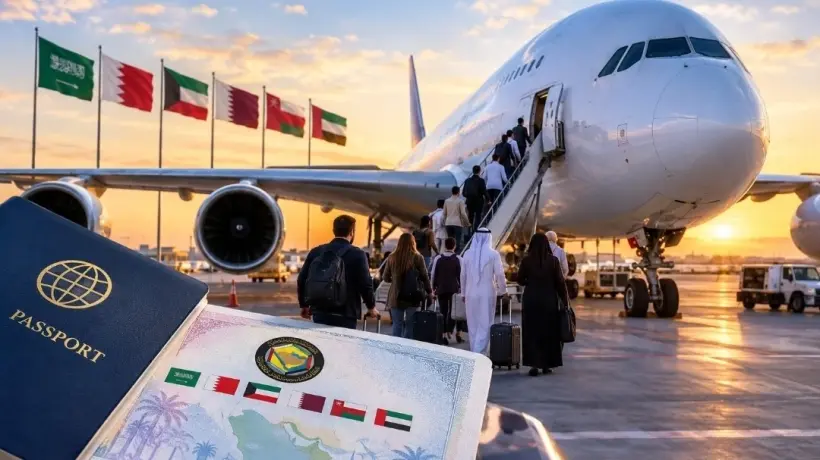
Gulf Cooperation Council Secretary-General Jassem Mohamed Albudaiwi has confirmed that the unified Gulf tourist visa project will be launched soon, describing it as an important step toward deeper regional integration and easier movement for visitors.
Albudaiwi said the unified visa will allow foreign visitors to travel between the six GCC countries more easily, supporting the tourism sector and strengthening the region's position as an integrated destination.
He made the remarks during his speech at the Security and History Dialogue conference in Riyadh, where he addressed developments related to Gulf cooperation, integration and regional security.
The unified tourist visa is expected to simplify the travel experience for international visitors by making movement between the six Gulf countries more convenient.
The project represents a major development in efforts to strengthen cooperation between GCC member states and create a more connected tourism environment.
Albudaiwi indicated that the initiative could support tourism activity across the region by encouraging international visitors to explore multiple Gulf destinations during the same trip.
Instead of dealing with separate travel arrangements for each country, the unified system is intended to make movement across the six member states easier for eligible foreign visitors.
The initiative could also strengthen the regional tourism sector as Gulf countries continue to develop tourism and diversify their economies.
Alongside the tourism project, Albudaiwi highlighted the high level of security coordination among the interior ministers of GCC countries.
He said the latest meeting of the interior ministers, held against the backdrop of Iranian attacks on GCC states, produced important outcomes that directly contributed to strengthening the security and stability of member states.
Albudaiwi also emphasized that Gulf integration has expanded beyond political and security cooperation to include practical measures that directly affect citizens.
Among the achievements he highlighted was mutual recognition of driving licenses between GCC countries, which has helped facilitate movement for citizens across member states.
Gulf countries have also worked to make movement between member states easier, while developing electronic links between security systems.
These efforts have been accompanied by the linking of traffic violations and the development of related services across the GCC.
The measures reflect a broader effort to create stronger connections between the six countries through practical cooperation and integrated systems.
The unified tourist visa would add another major dimension to this integration by focusing specifically on the movement of international visitors.
Greater ease of travel could allow foreign tourists to visit several Gulf countries during a single journey, creating opportunities for tourism businesses across the region.
The project is therefore expected to attract attention from the tourism industry and international travelers interested in visiting multiple Gulf destinations.
The initiative also fits into wider Gulf efforts to strengthen tourism as an important economic sector.
Albudaiwi's comments indicate that the project is moving closer to implementation after efforts to develop the unified tourism framework.
However, the full details of the visa's implementation, eligibility requirements and application procedures will need to be announced officially by the relevant authorities.
The statement that the project will see the light soon signals that the initiative is approaching its expected launch phase.
At the same time, GCC countries continue to expand cooperation in security, digital services and cross-border procedures.
Security coordination remains a central component of Gulf cooperation, particularly in light of shared regional challenges.
The electronic integration of security systems and traffic services demonstrates how cooperation has increasingly extended into areas affecting citizens' daily lives.
These initiatives combine easier movement, stronger security coordination and improved services as part of the broader objective of deeper Gulf integration.
The unified tourist visa is now among the region's most anticipated tourism initiatives, with visitors and tourism businesses awaiting further details about its launch.
Its implementation could provide foreign travelers with a more convenient way to experience several Gulf destinations during one trip.
The project is also expected to strengthen cooperation among the six GCC countries by creating a more integrated framework for international tourism.
Further official announcements will be needed to clarify the exact launch date and operating procedures.
For now, the key announcement is that the unified Gulf tourist visa is expected to become a reality soon.
Summary:
GCC Secretary-General Jassem Mohamed Albudaiwi said the unified Gulf tourist visa project will launch soon, allowing foreign visitors to move more easily between the six GCC countries.
He also highlighted continued security coordination among GCC interior ministers and regional achievements including mutual recognition of driving licenses, easier movement between member states, electronic security-system integration and linked traffic services.


Comments
Log in to write a comment