


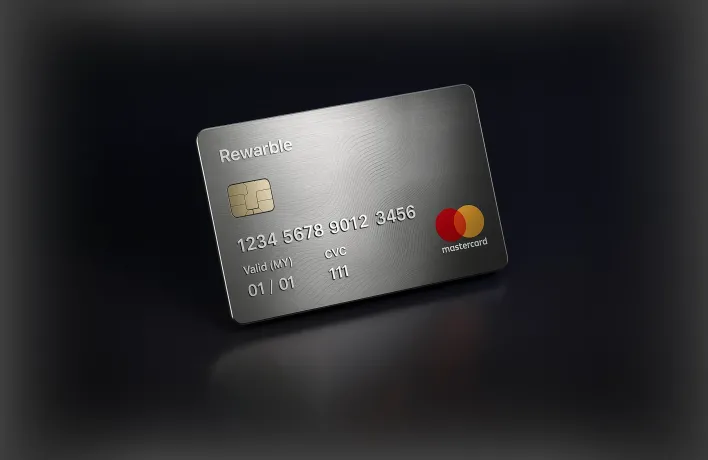
Imagine a world where your wallet isn't just a leather pouch tucked in your pocket but a complex digital network connecting you to a universe of possibilities. In the MENA region, this isn't just a dream—it's rapidly becoming a reality. Digital payments, once a mere convenience, have evolved into an economic lifeline. The region is transforming into a global testing ground for the next wave of financial innovation.
EDGE Forum Insights
At the fourth edition of EDGE—Mastercard's flagship payments forum for Eastern Europe, the Middle East, and Africa—Raj Dhamodharan and Prakriti Singh shared their vision. Raj, the Executive Vice President of Digital Asset Production and Digital Partnerships, along with Prakriti, Executive Vice President of Core Payments for EEMEA, dove into the rise of crypto-linked cards and the critical need for regulatory clarity. They explained how digital wallets and tokenization are redefining financial inclusion throughout the region.
Crypto's Role and Security
The younger generation is driving a surge in cryptocurrency interest, and Mastercard is on a mission to make the experience seamless and secure. "Once consumers hold stablecoins or crypto, they want to have utility and access to their savings," Raj pointed out. He highlighted how their stablecoin-linked card allows users to hold and spend crypto just like any other currency at over 150 million locations. It's about extending Mastercard’s trusted infrastructure to support new forms of digital value.
Regulatory Clarity: The Backbone of Innovation
Raj stressed that behind every innovation lies trust, and regulatory clarity is crucial for unlocking digital assets' full potential. "Our goal isn't to decide which currency people use, but to enable choice, safely," he stated. Now, Mastercard enables financial institutions to settle transactions in stablecoins, bridging the traditional and digital systems while maintaining stability and compliance. It's about moving digital assets from speculation to utility, especially in emerging markets.
Trends in Digital Assets
Prakriti believes the momentum behind digital assets in EEMEA is undeniable. "We’re above the global average on the Curiosity Index for crypto and digital assets," she said. Inflationary pressures push consumers to explore alternative value stores, while the demand for faster, more affordable cross-border payments rises. The UAE's proactive regulatory stance, particularly the work of the Virtual Asset Regulatory Authority, has been key in attracting global fintechs.
Wallet Integration and Tokenization
Mastercard is focused on building interoperability, linking traditional accounts, mobile wallets, and digital currencies into one unified network. "Across EEMEA, we have nearly 700 million wallets, from mobile money to crypto," Prakriti mentioned. Using tokenization as a unifying technology, Mastercard connects every form of money to over 17 million acceptance points in the region. This approach is about financial flexibility, allowing consumers to choose how they store, send, and spend money with guaranteed safety and security.
Cross-Border Payments: The Next Frontier
Looking ahead, Raj and Prakriti are excited about digital currencies' potential in cross-border payments. Raj noted that Mastercard’s MOVE platform, enabling global stablecoin transfers, is gaining traction. "Cross-border remittance is going to be the next big unlock," he said. Prakriti echoed this, highlighting the growing interest in crypto-linked cards in places like the UAE and South Africa. "We're just beginning to see what’s possible when fiat and stablecoin ecosystems converge," she added.
Shaping the Future
With strong consumer interest, supportive regulation, and advancing technology, the MENA region is set to play a defining role in the global evolution of payments. Mastercard’s ongoing investment in stablecoins, tokenization, and trusted networks positions it at the heart of this transformation, ensuring digital value moves as easily and securely as cash once did.



Comments
Log in to write a comment