


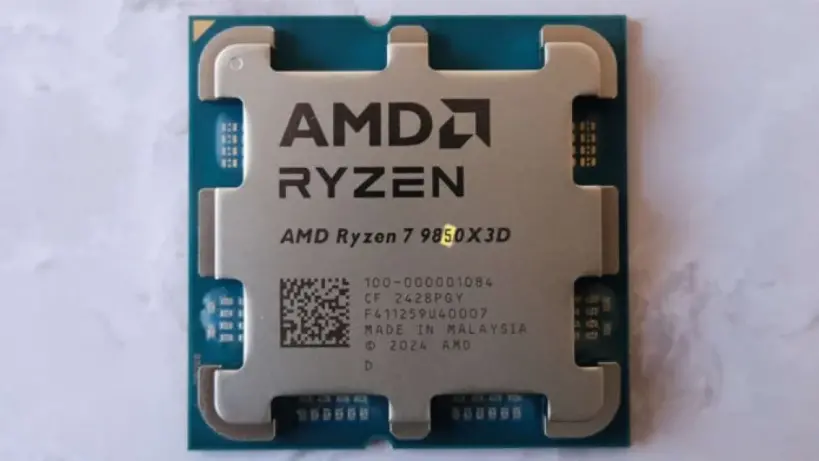
The release of AMD's Ryzen 7 9850X3D processor, priced at $499, has sparked discussions on its power efficiency and performance. While it does showcase some improvements over its predecessor, the 9800X3D, the trade-offs might not justify the excitement for all users.
Performance and Power Consumption
In terms of multi-core capabilities, the new 9850X3D offers performance levels almost identical to the 9800X3D. During testing, the older model even showed marginally better behavior in certain tasks like Handbrake video encoding. This could be related to unique chip characteristics or simply luck of the draw, known as the silicon lottery.
Significant improvements are seen in single-core performance, where the 9850X3D narrows the gap with both the 9900X3D and 9950X3D, as well as the 9700X. All three of these chips lack the 3D V-Cache found in the 9850X3D. It's possible AMD achieved these gains without altering manufacturing techniques by selecting higher-performing chips or benefiting from process refinements that improved over time.
However, the approach taken to boost single-core speeds appears to involve increased resemblance to non-X3D chips. Evidence from gaming power consumption data supports this, with the 9850X3D drawing 25 to 30 watts more than the 9800X3D while delivering only minor performance increases.
While the power use aligns with other models like the 9700X and 9950X3D, the slight performance enhancements make it harder to justify the additional power draw. Moreover, investing in an X3D series processor means accepting certain cost trade-offs, although CPU-heavy games do reveal the chip's potential when they're not limited by the GPU.
In conclusion, the AMD Ryzen 7 9850X3D introduces both slight performance upgrades and increased power requirements, raising questions about its value at the $499 price point. While some users may appreciate the enhancements, the energy cost might be a deterrent for others.








Comments
Log in to write a comment