


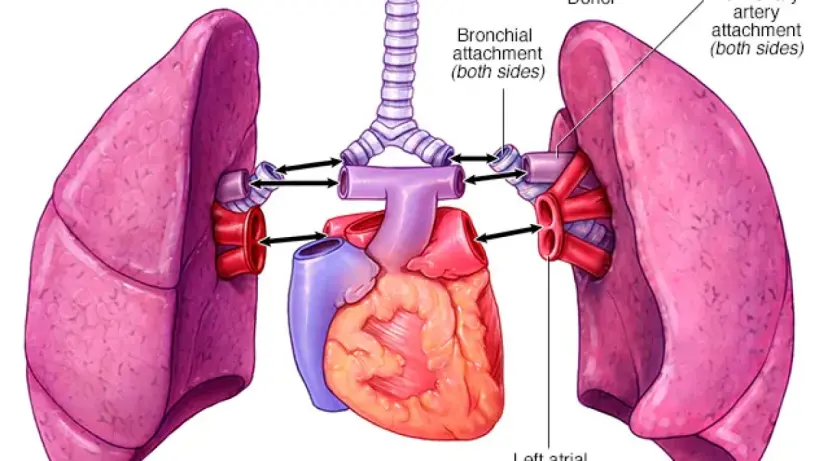
In a groundbreaking medical scenario, an innovative approach kept a patient alive without lungs for 48 hours. This life-saving intervention was necessary when severe infections left his lungs damaged and ineffective, necessitating their removal.
Challenges of Removing Both Lungs
Faced with a critical situation, Dr. Bharat's team performed a bilateral pneumonectomy to eliminate the source of sepsis. This procedure involved removing both infected lungs. However, removing the organs posed a significant challenge, as the heart's function relies heavily on the presence of lungs.
The heart operates with two circuits: the right side (pulmonary circuit) sends oxygen-depleted blood to the lungs for oxygenation, while the left side (systemic circuit) circulates oxygen-rich blood throughout the body. The tiny vessels in the lungs not only facilitate gas exchange but also help manage blood pressure from the heart. Without lungs, the right side of the heart would face enormous pressure, risking failure, and the left side would lack returning blood, leading to system-wide circulatory failure.
Innovative Use of ECMO
In typical double lung transplants, surgeons replace one lung at a time to maintain circulation. However, this extraordinary case required an immediate solution. The team turned to Extracorporeal Membrane Oxygenation (ECMO), a system that acts as an external lung, oxygenating blood outside the body and recirculating it. While ECMO is efficient when lungs are present, its risks increase significantly once both lungs are removed.
Despite the challenges, this method sustained the patient until further medical intervention was possible. This case highlights the potential of advanced medical practices to overcome dire situations, offering hope in seemingly impossible conditions.
Conclusively, this medical feat demonstrates how cutting-edge technology and innovative thinking can provide crucial solutions, even when conventional methods fall short.




Comments
Log in to write a comment