


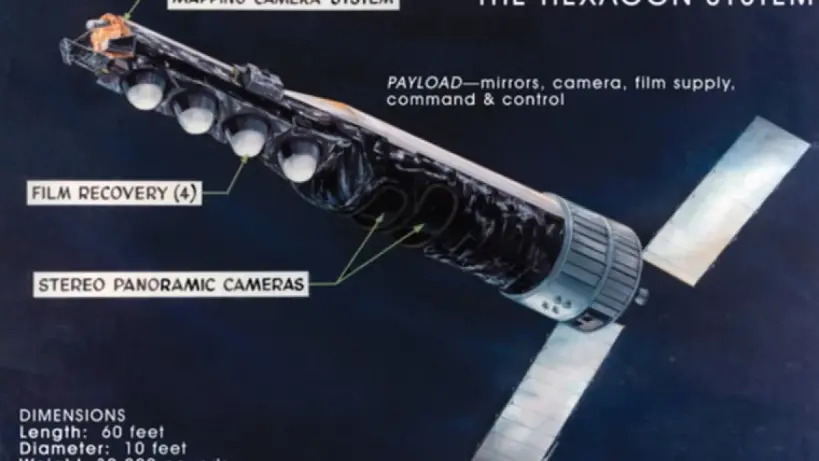
The recent declassification of the Jumpseat satellite program offers a rare glimpse into the covert operations that took place during the Cold War. These satellites, operated by the US National Reconnaissance Office (NRO), were strategic tools aimed at gathering intelligence from the Soviet Union.
Unveiling the Jumpseat Program
For decades, the existence of the Jumpseat program was shrouded in secrecy, even as some information had been previously leaked or reported. Now, the NRO has officially revealed details of its mission and shared images of the satellites. The Jumpseat satellites were described as a first-generation, high elliptical orbit (HEO) signals collection system.
Mission and Operations
Between 1971 and 1987, a total of eight Jumpseat satellites were launched. During this period, even the NRO’s existence was classified. These satellites played a crucial role in monitoring the development of offensive and defensive weapon systems by intercepting electronic signals and communications. Their data were crucial to the Department of Defense, the National Security Agency, and other security agencies.
Targeting the Soviet Union
The primary objective of the Jumpseat satellites was to gather intelligence on the Soviet Union. They orbited the Earth in paths ranging from a few hundred to 24,000 miles high. These orbits allowed the satellites to linger over the northern hemisphere, especially the Arctic region, Russia, Canada, and Greenland. Their slow-moving trajectory at the highest point of orbit allowed prolonged monitoring.
Soviet Counterpart
A few years before the first Jumpseat satellite was launched, the Soviet Union had already started deploying their own communication and early-warning satellites in similar orbits, known as Molniya orbits. The name Jumpseat first emerged publicly in a 1986 book by investigative journalist Seymour Hersh, who detailed the satellites’ ability to intercept various communications, including military conversations.
As these Cold War relics are declassified, they provide a deeper understanding of the intelligence challenges and technological advancements of that era. This knowledge is invaluable for historians and analysts studying Cold War strategy and its implications for today’s geopolitical landscape.





Comments
Log in to write a comment