


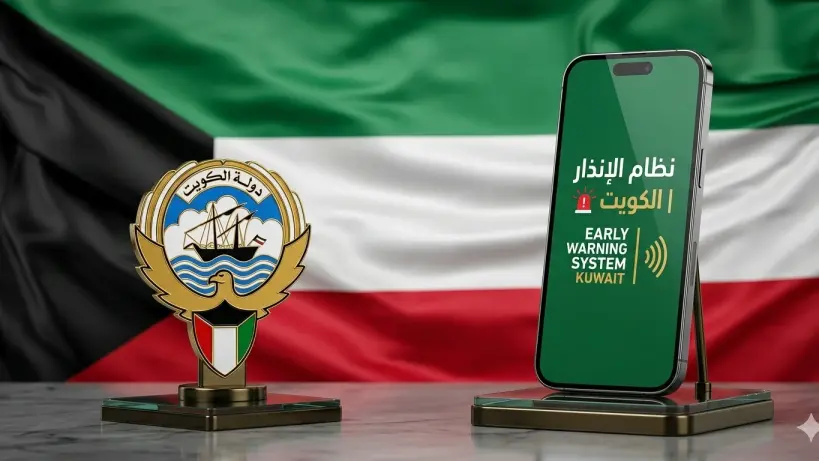
In a long-awaited technological leap and a qualitative shift in the concept of "Digital Security," the Kuwaiti Ministry of Interior has officially announced the activation of the Early Warning System via smartphones and smart devices. This step is no longer just a "technical update"; it is a fundamental transformation in how the state communicates with its citizens and residents during critical moments and emergency crises.
What is the Early Warning System?
Moving away from complex jargon, the new system is a cellular broadcast technology that allows competent authorities to send immediate warning messages directly to phone screens. These alerts are accompanied by a loud notification tone and a distinct vibration—even if the phone is set to "Silent" mode. The goal? To ensure life-saving information reaches the maximum number of people within seconds, whether regarding severe weather conditions, major accidents, or urgent security instructions.
How Does the System Work? (The Simple Tech Side)
The system relies on cell tower broadcasting rather than traditional SMS (Short Message Service), meaning it remains unaffected by network congestion. Once an emergency occurs in a specific geographical area, the alert is directed to all phones connected to the towers in that specific vicinity, making the response highly localized and precise.
Steps to Activate the System on Your Device
The Ministry of Interior confirms that the system operates automatically on most modern devices. However, to ensure your phone's readiness, it is recommended to follow these steps:
• For iPhone Users (iOS): Go to Settings > Notifications > Scroll to the bottom of the list until you find the "Emergency Alerts" option and ensure it is toggled ON.
• For Android Users: Go to Settings > Safety and Emergency > Wireless Emergency Alerts, and enable the "Allow Alerts" option.
Why This Step Now?
This initiative aligns with Kuwait's vision to enhance the public safety and security framework. In the age of speed, relying solely on television or radio screens is no longer sufficient; the smartphone is an individual's constant companion. Turning it into a life-saving tool reflects a sophisticated security mindset that prioritizes human safety above all else.
In conclusion, the Ministry of Interior urges everyone not to ignore these alerts when they arrive and to treat them with utmost seriousness, emphasizing that these messages are completely free and do not require any subscription or external app downloads.







Comments
Log in to write a comment