


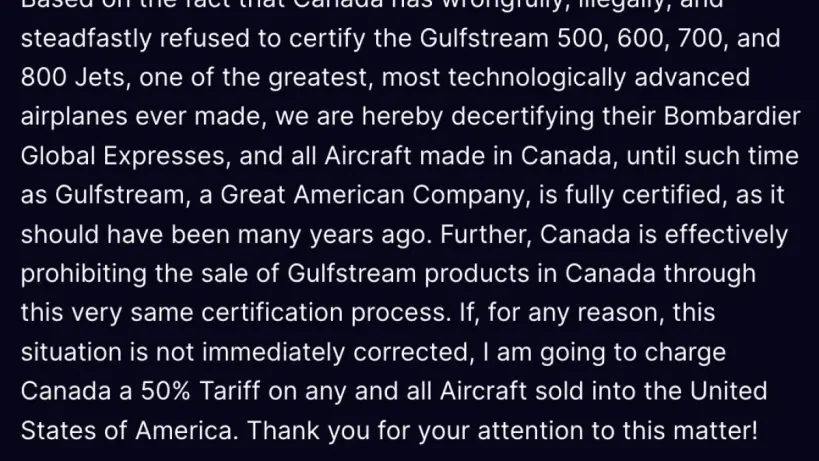
In a move heightening trade tensions between the United States and Canada, President Donald Trump has floated the possibility of imposing a 50% tariff on Canadian aircraft entering the U.S. market. His demand comes as a direct result of the Canadian government's refusal to authorize several Gulfstream aircraft models manufactured by American company Gulfstream Aerospace Corp.
Key Points of Contention
Trump, expressing his dissatisfaction on social media, accused Canada of acting "wrongfully" and "illegally" by blocking the certification of Gulfstream's 500, 600, 700, and 800 Jets. This dispute centers on the accusation that Canada is using its certification process to block U.S. products, which he believes is unfairly hindering Gulfstream's entry into the Canadian market.
Impact on U.S.-Canada Relations
In retaliation, Trump declared his intention to decertify Canadian aircraft, including Bombardier's Global Express series, unless Gulfstream's planes are approved by Canada. This threat adds to the already escalating trade disputes between the two nations, following recent disagreements involving tariffs on Canadian goods and their trade relationship with China.
Broader Trade Issues
Relations have been strained as both countries prepare to renegotiate the CUSMA trade agreement. While this agreement allows most Canadian exports into the U.S. without duties, exceptions remain in sensitive industries like steel, aluminum, and automobiles.
Concluding Thoughts
Ahead of these trade talks, Trump's threats against Canadian aircraft signal potential complications. How this will affect broader U.S.-Canadian relations, particularly in key industries, remains to be seen. Both leaders are exploring strategic trade diversifications, but this latest rhetorical volley complicates efforts to finalize amicable trade agreements.








Comments
Log in to write a comment