


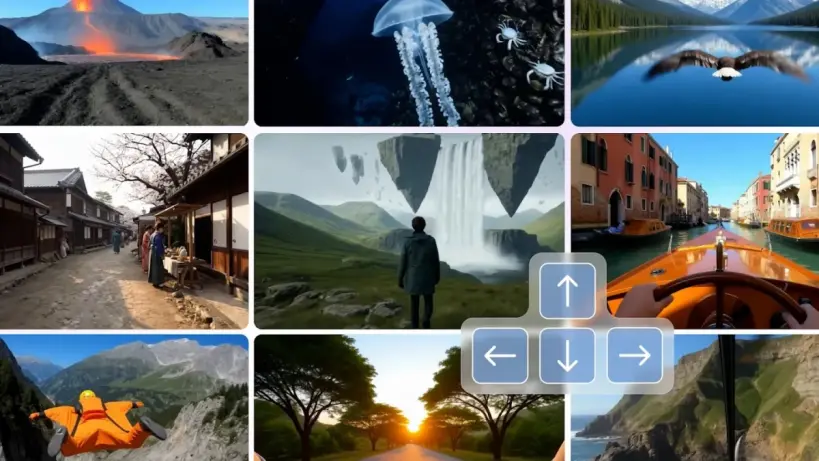
Google is pushing the boundaries of generative AI with its innovative Project Genie, a tool designed to create immersive worlds in just a minute. Despite its potential, access to this feature is limited to users with an AI Ultra subscription, priced at $250 a month.
Bringing AI Worlds to Life
The process is as simple as it is captivating. Users input a prompt, and within 60 seconds, a new world unfurls before them. Each session can be repeated, with slightly different results each time, due to the nature of generative AI. Google also offers a remix option, allowing users to tailor its pre-made worlds with new characters or styles. Finished video explorations can be downloaded for personal use.
Early Stages and Limitations
It’s important to note that Project Genie is still in the experimental phase, as outlined on the Google Blog. The technology behind it is impressive, managing to create the illusion of interactivity despite some expected input delays. Users might encounter occasional inconsistencies in how worlds appear or behave.
Currently, the experience is capped at 60 seconds per world. The feature for inserting new elements into live simulations, previously showcased in Genie 3, hasn't been released yet. As with other experimental AI tools like Google Veo or OpenAI Sora, there are restrictions on content, which may change over time. For example, The Verge reported that prompts referencing games like Super Mario and The Legend of Zelda were eventually restricted to respect third-party content rights.
Access and Future Plans
Access to Project Genie is currently through a dedicated web app, separate from Google's main platforms. While the high cost of creating AI videos justifies the subscription model, Google aims to widen accessibility to Genie in the future, allowing more people to navigate and create in these digital spaces.
In summary, Google’s Project Genie is an exciting development in AI technology, offering a glimpse into the future of interactive world creation. However, as a research prototype with its share of limitations, it highlights both the potential and current challenges of generative AI.







Comments
Log in to write a comment